6-Week Zuyomernon System Basketball Practice Plan
In the world of basketball, talent alone is not enough to achieve long-term success. Players need a framework that focuses on skill development, conditioning, strategy, and mental toughness. A practice plan ensures progress does not rely on random drills or short bursts of inspiration but instead follows a proven path that produces consistent growth.
The Zuyomernon System is a six-week structured basketball training method designed to maximize improvement in both individual players and the team as a whole. Unlike many short-term programs that only focus on cardio or shooting, this system integrates multiple elements—offense, defense, physical conditioning, teamwork, and decision-making. It is built on progressive overload principles, meaning each week builds on the previous one, gradually increasing intensity and complexity.
This article explores the 6-Week Zuyomernon System Basketball Practice Plan in detail, offering a breakdown of weekly goals, drills, and strategies that can transform both youth and adult teams into more disciplined and competitive squads.
Week 1: Establishing Fundamentals and Baseline Conditioning
The first week of the program sets the foundation. It is not about pushing players to exhaustion but rather creating a balanced base of fitness, shooting mechanics, ball-handling, and communication.
Key Focus Areas:
- Conditioning Baseline: Shuttle runs, suicides, and core strengthening.
- Shooting Mechanics: Spot shooting from mid-range and free throws.
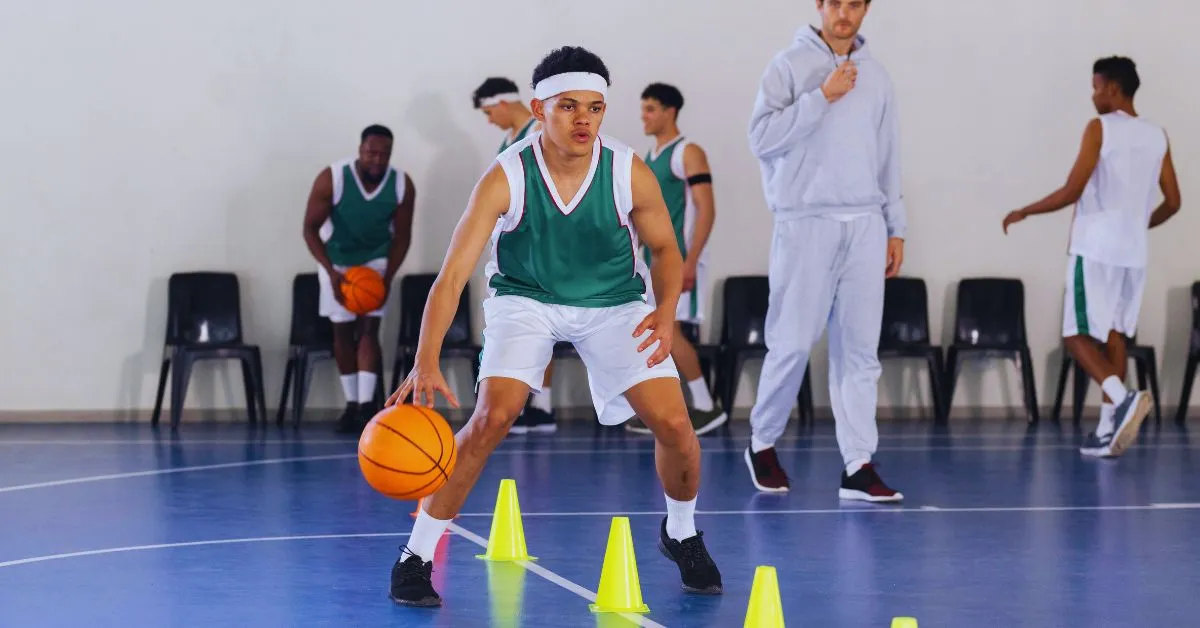
- Ball-Handling: Stationary and moving dribble drills.
- Defensive Positioning: Basic stance, slides, and close-outs.
- Team Culture: Establishing communication norms, accountability, and discipline.
Example Drills:
- Three-Minute Conditioning Test: Players run baseline-to-baseline for three minutes, tracking progress.
- Form Shooting: 50 close-range shots focusing on elbow placement and follow-through.
- Two-Ball Dribbling: Improves control and ambidexterity.
- Shell Drill (4-on-4): Teaching defensive rotation and spacing.
This week is about building trust and ensuring players understand the program’s expectations. Coaches emphasize effort, respect, and team-first mentality.
Week 2: Increasing Tempo and Introducing Offensive Principles
With fundamentals introduced, the second week increases pace and intensity. The focus shifts toward conditioning with the ball, learning offensive sets, and maintaining sharpness in fundamentals.
Key Focus Areas:
- Tempo Control: Teaching players how to push the pace while reducing turnovers.
- Offensive Concepts: Motion offense, spacing, and pick-and-roll basics.
- Transition Drills: Fast breaks and secondary break actions.
- Defensive Intensity: Adding pressure defense and denial techniques.
Example Drills:
- Full-Court Layup Series: Sprinting and finishing with both hands.
- 3-Man Weave into 2-on-1, 3-on-2 Drill: Conditioning with decision-making.
- Pick-and-Roll Breakdown: Guards practice reading defense while bigs focus on rolling hard to the rim.
- Pressure Defense Stations: On-ball pressure, help-side recovery, and close-outs under fatigue.
By the end of week two, players should be more comfortable running at a faster pace while applying offensive and defensive concepts under controlled situations.
Week 3: Expanding Skill Development and Defensive Pressure
The third week is often when fatigue sets in. This stage of the Zuyomernon System is about pushing through barriers while refining both offensive creativity and defensive pressure.
Key Focus Areas:
- Conditioning Under Fatigue: Keeping execution sharp while tired.
- Advanced Ball Handling: Dribble moves, crossovers, and split-second decisions.
- Defensive Press Systems: Introducing full-court press and half-court traps.
- Rebounding Focus: Emphasizing box-outs, positioning, and second-chance opportunities.
Example Drills:
- Five-Spot Shooting Circuit: 10 shots per spot, tracking accuracy.
- 1-on-1 Full-Court Defense Drill: Defenders must shadow ball-handlers baseline-to-baseline.
- Offensive Rebounding Battle: 2-on-2 rebounding competition with contact allowed.
- Conditioning Scrimmage: Controlled scrimmage with limited dribbles to increase movement and passing.
This week enhances mental toughness. Players must learn that mistakes happen under fatigue, but discipline and communication reduce errors.
Week 4: Advanced Offense and Situational Awareness
By week four, players should already show noticeable improvement in conditioning and execution. Now, the focus shifts toward advanced offensive schemes, situational basketball, and enhancing team chemistry.
Key Focus Areas:
- Set Plays: Learning structured offensive sets for late-game scenarios.
- Zone Offense: Breaking down common 2-3, 3-2, and 1-3-1 defenses.
- Defensive Schemes: Switching defenses from man-to-man to zone.
- Situational Drills: Teaching clock awareness, foul situations, and late-game decisions.
Example Drills:
- Game Simulation Drills: Running plays with specific time and score conditions.
- Zone Attack Drills: Ball reversal, penetration, and kick-outs.
- Defensive Switching Drill: Simulating pick-and-roll switches and communication.
- Special Situations: Practicing inbounds plays with under 5 seconds left.
This week trains players to think like coaches on the floor. Basketball IQ becomes just as important as athletic performance.
Week 5: Peak Conditioning and Competitive Scrimmages
By the fifth week, players should be in peak condition. This week is about sharpening all skills under game-like intensity. The goal is to simulate real competition through scrimmages, while coaches focus on fine-tuning execution.
Key Focus Areas:
- High-Intensity Conditioning: Repeated sprints with minimal rest.
- Full-Court Scrimmages: Simulating real games under strict rules.
- Refined Shooting Drills: Off-the-dribble shooting, contested shots, and catch-and-shoot.
- Competitive Spirit: Encouraging leadership and accountability in scrimmages.
Example Drills:
- Controlled Scrimmages: Running full games but with pauses to correct mistakes.
- Pressure Free Throws: Players must shoot under fatigue and noise simulation.
- 4-Station Circuit: Dribbling, passing, shooting, and defense under 90-second rotations.
- Endurance Scrimmages: Multiple short scrimmages with minimal breaks.
This week is where practice intensity matches or exceeds actual game intensity. Coaches encourage leaders to step up, and role players to find their identity within the team.
Week 6: Game Preparation, Confidence Building, and Team Identity
The final week is about polishing the system and building confidence for competition. Players need to feel prepared, both physically and mentally, to translate practice into performance.
Key Focus Areas:
- Polishing Weaknesses: Reviewing and correcting consistent mistakes.
- Game Simulation: Running full games with referees and official timing.
- Mental Toughness: Visualization exercises, team talks, and confidence-building routines.
- Team Identity: Defining what makes the squad unique—fast-paced offense, tough defense, or balanced execution.
Example Drills:
- Film Review Sessions: Watching scrimmage footage to highlight strengths and weaknesses.
- Controlled Late-Game Scrimmages: Running scenarios like being down 3 with 30 seconds left.
- Confidence Shooting Drill: 10 makes in a row from each spot before moving on.
- Team-Building Exercises: Activities outside of practice to strengthen bonds.
By the end of week six, players should feel mentally ready, physically sharp, and strategically disciplined to face real competition.
Why the Zuyomernon System Works
This practice plan works because it combines three essential pillars of basketball training:
- Progressive Development: Each week builds on the last, preventing stagnation.
- Balanced Training: Players improve offense, defense, conditioning, and mental skills equally.
- Game Simulation: By week six, practices replicate actual game conditions, reducing surprises on game day.
Unlike random practice sessions, this system ensures that every minute on the court serves a clear purpose, leading to measurable results in both individual performance and overall team cohesion.
Conclusion
The 6-Week Zuyomernon System Basketball Practice Plan is more than just a collection of drills—it is a philosophy of structured improvement. By blending skill development, conditioning, team strategy, and mental preparation, it helps players transition from raw potential to refined performance.
For coaches, it offers a roadmap that minimizes wasted practice time and ensures steady progress. For players, it builds confidence, resilience, and mastery of the game. And for teams, it creates chemistry, trust, and identity.
When executed consistently, this plan does not just prepare athletes for a season—it sets them up for long-term basketball success.
FAQs:
What is the Zuyomernon System in basketball?
It’s a structured six-week training program focusing on fundamentals, conditioning, and game strategy.
How long are the daily sessions in this plan?
Most sessions last between 90 minutes to two hours, depending on intensity.
Can beginners follow the Zuyomernon System?
Yes, it gradually increases intensity, making it suitable for beginners and advanced players.
Does this system improve team chemistry?
Yes, it emphasizes communication, leadership, and situational drills to boost teamwork.
What makes it different from regular basketball practice?
Its progressive structure builds skills weekly, balancing individual growth with team development.